Online or onsite, instructor-led live Soft Skills (also known as people skills, interpersonal skills, social skills and transferable skills) training courses demonstrate through discussion and exercises how to understand the dynamics of human relations in a business environment and how to apply Soft Skills techniques, habits and mindsets to improve relationships as well as business results, while creating a more fulfilling experience in work and life.
Soft Skills training is available as "online live training" or "onsite live training". Lahore onsite live Soft Skills trainings can be carried out locally on customer premises or in NobleProg corporate training centers.
NobleProg -- Your Local Training Provider
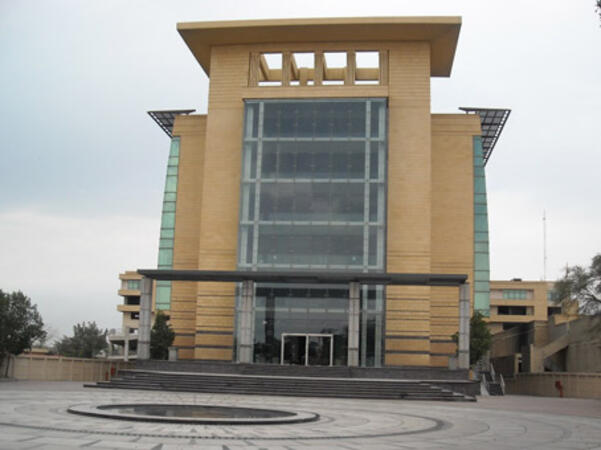
Lahore - Classroom
The Enterprise, Multan Road, Lahore, pakistan, 54500
For Sales Enquires and Meetings
Please note that, in most cases, usually we are not able to organise ad hoc sales meetings, especially on our classrooms as they are all occupied with ongoing training sessions . Please contact us by e-mail or phone at least one day earlier to make an appointment with one of our consultants at our corporate office
This instructor-led, live training in Lahore (online or onsite) is aimed at beginner-level office managers who wish to learn knowledge and skills in filing techniques and documentation management.
By the end of this training, participants will be able to:
Understand the principles of effective filing systems.
Learn techniques for managing and controlling both physical and electronic documents.
Develop skills in creating, maintaining, and archiving records.
Apply best practices for documentation management to improve organizational efficiency.
This instructor-led, live training in Lahore (online or onsite) is aimed at beginner-level professionals who wish to explore fundamental ethical theories, develop ethical decision-making skills, and understand the role of protocol in maintaining integrity and professionalism.
By the end of this training, participants will be able to:
Understand fundamental ethical theories and principles.
Develop skills for ethical decision-making.
Recognize the significance of protocol in professional settings.
Learn to navigate ethical dilemmas and conflicts of interest.
Understand the role of ethics and protocol in different industries.
This instructor-led, live training in Lahore (online or onsite) is aimed at participants at all levels, including employees, team leaders, and HR professionals, who wish to understand workplace harassment, prevent it, and foster an inclusive and respectful workplace culture.
By the end of this training, participants will be able to:
Understand what constitutes workplace harassment and its various forms.
Identify behaviors that contribute to a respectful workplace.
Respond effectively to harassment incidents.
Recognize the legal and organizational policies surrounding harassment prevention.
Promote a positive, inclusive, and respectful workplace culture.
This instructor-led, live training in Lahore (online or onsite) is aimed at beginner-to-intermediate level hospitality staff who wish to enhance their skills for providing excellent service.
By the end of this training, participants will be able to:
Gain knowledge and skills in formal etiquette, focusing on hosting, dining, and serving.
Understand serving protocols and the rationale behind them, enabling staff to execute these guidelines proficiently.
Improve customer service quality, and strengthen communication and interpersonal skills for better interaction with guests.
Understand diverse cultural etiquettes and sensitivities, ensuring respectful and appropriate service to all guests.
Handle unexpected situations and guest requests professionally and efficiently.
In this instructor-led, live training in Lahore, participants will learn how to prepare and deliver a convincing PowerPoint presentation. From technical preparation to skillful delivery, each essential point is covered in this interactive workshop.
By the end of this training, participants will be able to:
Apply the right mindset for delivering a powerful and convincing presentation.
Practice effective communication techniques to enhance a presentation.
Prepare PowerPoint slides that complement and strengthen a presentation.
Create a connection with the audience that facilitates trust and enables the sale of an idea, proposal, product or service.
This instructor-led, live training in Lahore (online or onsite) is aimed at beginner-level team leaders and managers who wish to understand and leverage personality types to build stronger team cohesion, enhance communication, and manage team dynamics effectively.
By the end of this training, participants will be able to:
Strengthen team cohesion through understanding and leveraging different personality types.
Manage diverse personalities effectively.
Enhance team communication and conflict management.
This instructor-led, live training in Lahore (online or onsite) is aimed at beginner-level to intermediate-level subject-matter experts (SMEs) who wish to transition into instructor roles and improve their ability to train others effectively.
By the end of this training, participants will be able to:
Understand how adult learning occurs and apply appropriate instructional methods.
Organize training sessions effectively using structured planning techniques.
Enhance communication skills for better knowledge transfer.
Engage multi-generational audiences with customized training approaches.
Develop workshops with clear objectives, dynamic content, and interactive teaching methods.
Handle challenging training situations and difficult learners with confidence.
Prepare, practice, and deliver impactful training sessions.
This instructor-led, live training in Lahore (online or onsite) is aimed at beginner-level to intermediate-level professionals and managers who wish to enhance their critical thinking, decision-making, and problem-solving capabilities in personal and professional contexts.
By the end of this training, participants will be able to:
Identify biases and logical fallacies in reasoning.
Apply critical thinking techniques to real-world scenarios.
Improve decision-making processes through structured analysis.
Enhance problem-solving strategies for complex situations.
This instructor-led, live training in Lahore (online or onsite) is aimed at team leaders and members who wish to use PRISM Brain Mapping to discover the strengths, needs, and motivators of team members and learn how to manage diversity more effectively.
By the end of this training, participants will be able to:
Obtain a strengthened understanding among team members through better knowledge of their behavior preferences and communication, strengths, needs, and work motivators.
Discovery of team strengths and how to utilize them to increase efficiency in achieving goals.
Find solutions to cooperation challenges, enabling the team to work more effectively.
Increase job satisfaction for team members through analysis of how each can better utilize their strengths, and potential, and minimize stress factors at work.
Have more effective diversity management in the team and better task alignment to people through discovering team members' strengths, preferences, and motivators and discussing individual employee reports.
Have a better understanding of the management style of the leader through discovering their leadership profile and its impact on the team.
This instructor-led, live workshop in Lahore (online or onsite) is aimed at business professionals who wish to integrate mindfulness into their work environment to boost productivity, leadership, and well-being.
By the end of this training, participants will be able to:
Understand the science and principles behind mindfulness.
Develop self-awareness to enhance decision-making and leadership skills.
Improve concentration, productivity, and emotional intelligence.
Manage workplace stress, uncertainty, and high-pressure situations.
Foster a positive and collaborative work culture.
Apply mindfulness techniques to enhance creativity and problem-solving.
This instructor-led, live training in Lahore (online or onsite) is aimed at beginner-level HR professionals and team leaders who wish to develop effective reskilling and upskilling strategies to prepare their workforce for the evolving demands of the technology sector.
By the end of this training, participants will be able to:
Learn the tools and strategies to identify skills gaps and design impactful reskilling and upskilling initiatives.
Foster a culture of continuous learning to adapt to the rapid changes in the technology sector.
Implement effective measurement and feedback mechanisms to ensure ongoing program alignment and success.
This instructor-led, live training in Lahore (online or onsite) is aimed at intermediate-level to advanced-level commercial management professionals who wish to strengthen their interpersonal and decision-making skills for improved business outcomes.
By the end of this training, participants will be able to:
Enhance customer interactions through anticipation, assertive communication, and market knowledge.
Strengthen teamwork, adaptability, and problem-solving skills.
Develop effective decision-making, disciplined execution, and delegation techniques.
Improve negotiation, innovation, and change management skills.
This live training in Lahore equips beginners with evidence-based tools to manage stress and build resilience. Through reflective practices and hands-on exercises, participants learn to improve adaptability, handle personal challenges, and stay open to feedback for better performance.
This instructor-led, live training in Lahore (online or onsite) is aimed at beginner-level to intermediate-level trainers, team leaders, and HR professionals who wish to improve their training delivery, engage learners effectively, and maximize learning retention.
By the end of this training, participants will be able to:
Understand the role and responsibilities of an effective trainer.
Apply adult learning principles to enhance knowledge retention.
Use different learning styles to engage diverse audiences.
Develop structured training programs with clear objectives.
Enhance verbal and non-verbal communication for better engagement.
Utilize interactive teaching strategies and classroom management techniques.
Provide constructive feedback and evaluate training effectiveness.
This highly participative course in Lahore helps you enhance assertiveness skills through individual and group discussions. Participants will learn to overcome barriers, manage difficult situations effectively, and communicate confidently with colleagues to achieve win-win outcomes.
Enhance professional relationships in Lahore with this interactive course. Participants will master assertiveness, active listening, and conflict management techniques. Learn to build effective team communication and apply constructive feedback strategies to achieve business goals.
Enhance your conflict resolution skills with this practical training in Lahore. Learn to manage emotions, apply assertiveness, and use negotiation techniques to turn disputes into opportunities. Build practical strategies for effective communication and stress management in teams.
Designed for emerging leaders and managers, this course in Lahore enhances team management efficiency and decision-making skills. Participants will learn to adapt leadership styles, resolve conflicts effectively, and master essential techniques in communication, motivation, and time management.
This practical training in Lahore helps you overcome stage fright and master core presentation skills. Learn to structure impactful talks, design engaging slides, and project your voice with confidence. Ideal for professionals seeking to improve communication.
Master advanced PowerPoint skills in Lahore to build polished, scalable presentations. Learn slide master customization, SmartArt for visual mapping, and deep Excel integration for live data dashboards. Equip yourself with add-in workflows to streamline complex deck production.
This course in Lahore teaches advanced PowerPoint slide design, focusing on visual storytelling, composition, and chart creation. It builds practical skills in image editing and effective element distribution, preparing professionals to deliver compelling presentations.
Join this instructor-led workshop in Lahore to master the art of delivering impressive presentation decks using PowerPoint and modern tools. The course covers slide design, data visualization, and speaker techniques, helping you build confidence and engage your audience effectively.
This instructor-led, live training in (online or onsite) is aimed at team leaders and middle managers who want to adopt AI safely and effectively by addressing the human factors that drive success: trust, accountability, decision habits, and psychological safety.
By the end of this training, participants will be able to:
Define when to use AI and when not to (stop rules).
Verify AI outputs with practical standards (red flags, second source).
This course offers a comprehensive and practical introduction to the phenomenon of burnout, one of the most pressing challenges in modern workplaces. Participants will explore the difference between stress and burnout, identify personal and professional risk factors, and learn how to recognise early signs of exhaustion — both in themselves and in others.
Through guided reflection, self-assessment tools, and group discussions, the programme encourages participants to develop awareness, resilience, and personal coping strategies. It also highlights the role of organisations and leaders in creating a supportive environment that prevents burnout and promotes psychological wellbeing.
The session combines theory, self-diagnosis, and practical exercises to ensure that every participant leaves with a clear action plan for maintaining balance and energy in their professional life.
A Customer Care Course is designed to educate participants on the fundamentals of providing exceptional service and care to customers. It focuses on treating customers with respect and kindness, building an emotional connection, and ensuring their satisfaction and loyalty. These courses cover a range of topics, including communication skills, time management, de-escalation techniques, and industry best practices. Through real-life examples and practical exercises, learners gain insights into effectively handling customer inquiries, complaints, and feedback. The aim is to equip individuals with the necessary skills to deliver professional, helpful, and high-quality service across various customer interaction points, enhancing the overall customer experience.
Change management is a process aimed at effectively implementing change within an organization to achieve desired goals and adapt to changing environments. It requires understanding the reasons why change is necessary and identifying areas that need modification, as well as clearly defining the objectives and benefits that the change will bring. Change management is a dynamic process that demands flexibility, openness to feedback, and readiness to adjust strategies based on people's reactions and changing conditions. It is also crucial to recognize that changes are not always easy, which is why it is important to create a plan that takes into account both organizational goals and individual needs during the change process.
This interactive training in Lahore helps team members master communication, emotional intelligence, and stakeholder management. Participants learn to manage their own behaviour, understand others, and effectively influence key stakeholders in a dynamic business environment.
This interactive course in Lahore helps managers and team leaders master communication and influence skills. Participants learn to manage stakeholder relationships, handle difficult office situations, and lead effectively by understanding leadership versus management styles and delivering change.
Critical Thinking in the Workplace is a practical, interactive programme designed to help professionals analyse information more effectively, challenge assumptions, identify the real causes of problems and make better decisions.
Participants learn a structured approach to critical thinking that can be applied to everyday workplace challenges, from analysing complex problems and evaluating evidence to generating alternative solutions and making well-reasoned decisions.
The programme combines analytical thinking, problem solving, creative thinking and decision making. Throughout the course, participants work with practical exercises, discussions and case studies relevant to their roles and industry. Wherever possible, the training can incorporate the client's own business challenges and real workplace scenarios.
This instructor-led, live training in Lahore (available online or onsite) is designed for teams seeking to assess, manage, and evaluate both individual and collective emotional intelligence.
By the end of this training, participants will be able to:
Measure individual EQ to optimize interactions with colleagues.
Interpret others' emotions and behavioral styles to strengthen team relationships.
Leverage emotional intelligence to foster a positive, productive work environment.
Apply emotional intelligence strategies to effectively navigate change and resolve conflict.
"High-Impact Communication Skills," designed to equip participants with the essential tools for clear, confident, and influential communication. In today's business environment, the ability to convey ideas effectively is paramount. This training addresses two of the most critical aspects of professional communication: mastering interpersonal skills and delivering powerful public presentations.
The program takes a holistic approach, beginning with foundational communication principles and then moving to a dedicated module on overcoming the fear of public speaking. Participants will then learn practical, actionable techniques to structure and deliver compelling presentations. The entire learning experience is underpinned by the principles of Emotional Intelligence, empowering participants to communicate with greater empathy, awareness, and impact.
By the end of this training, participants will be able to:
Apply practical techniques for clearer, more empathetic, and objective interpersonal communication.
Implement proven strategies to manage public speaking anxiety and project confidence.
Structure a compelling presentation with a clear opening, logical flow, and memorable conclusion.
Deliver presentations in an engaging manner, utilizing effective body language and vocal variety.
Identify the core principles of Emotional Intelligence and use them to build stronger professional relationships.
Develop a personal action plan to continue fostering their communication and presentation skills
This instructor-led, live training in Lahore (online or onsite) is aimed at beginner-level / intermediate-level / advanced-level individuals who wish to provide practical tools for navigating conflicts, delivering constructive feedback, and maintaining professional authority under pressure. This training is specifically crafted to help professionals bridge the gap between technical expertise and interpersonal influence, ensuring their ideas are not just heard, but understood and acted upon.
By the end of this training, participants will be able to:
This practical training in Lahore helps you build strong interpersonal skills. It covers emotional intelligence, effective communication, and conflict resolution strategies to help you manage relationships with colleagues, stakeholders, and customers more effectively.
Organizations such as Pfizer, Hewlett Packard, Dell EMC, and VMware have leveraged this programme to develop a more balanced influencing style and build resilient, adaptive responses to workplace challenges. Whether your goal is to create high-performing work teams, consistently win contracts through expert pitching, successfully negotiate optimal terms, or systematically build shareholder value, this programme provides the behavioral precision and strategic alignment needed to drive measurable impact.
Participants will move beyond foundational communication into advanced influence architecture, learning to calibrate their style, navigate resistance, secure commitments, and scale collaborative impact across complex organizational networks.
The Ishikawa Diagram, also known as the fishbone diagram or cause-and-effect diagram, is a tool created by Kaoru Ishikawa. It is used to visually depict the potential causes of a specific event or problem, facilitating the analysis of the factors that might contribute to a particular issue. The diagram resembles the skeleton of a fish, hence the name "fishbone," and is used to identify and organize the causes of an issue systematically. It is particularly useful in product development and quality management processes, where identifying the root causes of problems is crucial. The Ishikawa Diagram helps teams brainstorm and categorize causes, such as methods, machinery, materials, manpower, and environment, to find the root cause of a quality or performance problem.
Cultural differences can have a significant impact on teamwork. Different cultures may prefer different communication styles, such as direct, indirect, expressive, or more evasive. This may lead to differences in the interpretation of messages. Gestures, tone of voice, and words used can have different meanings in different cultures. Something that is acceptable in one culture may be offensive in another. Different cultures may have different approaches to hierarchy in the workplace. Some cultures may be more hierarchical, where decisions are made by people higher up in the hierarchy. Cultures differ in their approach to working time and deadlines. Some cultures may value punctuality more, while others may be more flexible. Different cultures may have different approaches to conflict. Some cultures may avoid confrontation, while others may prefer open conflict resolution. In some cultures, decisions are made after consultation and team discussions, while in others decisions are made by a single leader. Different cultures have different perceptions and approaches to diversity. It is important to build awareness and respect for cultural differences in the workplace. In teamwork, it is crucial to understand and respect cultural differences. Building an atmosphere of open communication, respect and flexibility in accepting diversity can help manage cultural differences and create an effective work environment. This also opens the door to benefiting from diversity through diverse perspectives and ideas.
This interactive course in Lahore equips managers with essential skills in leadership, team development, and performance management. Learn to drive organizational change, negotiate effectively, and resolve workplace conflict. Enhance your ability to lead high-performing teams successfully.
This instructor-led, live training in Lahore (online or onsite) is aimed at medical professionals, physician leaders, and clinical trainers who wish to strengthen their presentation skills, assertive communication, peer influence, and scientific storytelling abilities in high-stakes medical settings.
This instructor-led, live training in Lahore (online or onsite) is aimed at managers and executives who wish to implement the right tools, skills, and methodologies to manage remote teams.
By the end of this training, participants will be able to:
Explore remote leadership, structures, and components to successfully adapt a remote work setup.
Develop trust, goals, culture, and teamwork to create an effective and productive remote team.
Use existing tools and technologies to improve virtual communication and collaboration.
Implement goal setting and project management methods to measure the performance of a remote team.
This two-day course in Lahore helps you achieve better negotiation outcomes with customers, suppliers, and colleagues. It teaches effective tactics and builds confidence through participative learning, covering personal styles, preparation, power dynamics, and win-win bargaining strategies.
Develop personal efficiency and master meeting management in this practical course in Lahore. Learn to prioritize work, delegate tasks effectively, and assertively say no. By understanding time management, you can reduce unnecessary meetings and focus on what truly matters for career success.
Learn to craft compelling financial slide decks that bridge the gap between complex numbers and executive communication. This 7-hour course covers design strategies, visualizations, and Excel integration to help you master storytelling. Gain practical skills for confident presentation in Lahore.
This practical training in Lahore helps staff deliver confident, structured presentations to diverse internal and external audiences. Participants learn to prepare effective content, use visual aids, and manage nerves through hands-on delegate presentations with detailed one-to-one feedback.
This 14-hour instructor-led training in Lahore helps participants master self-expression, confidence, and persuasive delivery techniques. Through interactive exercises and role-playing, attendees learn to structure and present ideas effectively, enhancing their professional impact and influence.
Stakeholder engagement and management refers to the process of actively engaging, building positive relationships, and effectively managing individuals or groups who have an interest in or are affected by a project, initiative, or organization. Stakeholders are individuals, groups, or organizations that may influence the project or be affected by it. These can include employees, customers, suppliers, local communities, company owners, regulators, or other groups with an interest in or influence over a specific project or activity. Stakeholder management involves identifying stakeholders, understanding their needs, expectations, and impact on the project or organization, as well as building and maintaining effective relationships.
This instructor-led, live training (online or onsite) is aimed at professionals who wish to understand stress dynamics, learn practical strategies to manage stress, and implement techniques to enhance well-being in the workplace.
By the end of this training, participants will be able to:
Identify personal and workplace stressors.
Distinguish between productive and negative stress.
Apply practical techniques to reduce and manage stress.
This instructor-led, live training in Lahore (online or onsite) is aimed at team leaders and team members who wish to improve the way in which they communicate, collaborate and relate to each other. By following a series of practices, teams can enhance these skills, leading to more productive work and a happier work life.
By the end of this training, participants will be able to:
Identify and address common problems in how they communicate and respond to others at work.
Improve the efficiency with which work is carried out as a team.
Understand the individual as well as the collective needs of a team so as to better manage and direct their efforts.
Understand the meaning and importance of emotional intelligence as an indicator and guide to improve human relations at work.
This practical training is designed to help participants better understand how they manage their time and workload, and to improve their overall productivity in daily work.
The course is built around the idea that time is a limited resource and focuses on shifting from a reactive way of working to a more structured approach based on planning and prioritisation.
Our services are delivered online to clients throughout the world in collaboration with a growing international partner network. Our transformational 10-week, group-based learning programmes are designed to inspire and capacitate mangers, and are hosted by expert
facilitators and coaches, conveniently delivered online in the normal flow of work…
By the end of this training, participants have nurtured the following skills:
EMOTIONAL INTELLIGENCE
Teams are only as strong as the human relationships that exist between people.
COACHING
Essential skills for leaders to be influential and get the best from their people
LEADERSHIP
Management is about task and process. Leadership is about people and growth.
CULTURE
Sustained engagement builds the habits and norms of a high-performing team.
TEAMS
A group of individuals is not a team. Good leaders build great teams.
Join this one-day Train the Trainer course in Lahore to master adult learning stages and effective delivery techniques. Build essential skills in program design, communication, and group dynamics to create engaging, high-impact training experiences. Leave equipped to handle challenges confidently.
This 1-1 live training (online) in Lahore is aimed at everyone who wish to get more structure and productivity in their job.
By the end of this training, participants will be able to:
Get more in life.
Control their time.
Get their focus back.
Plan their week effectively.
Know how to deal with stress.
Read more...
Last Updated:
Testimonials (7)
We have to have the right strategies to communicate better and this training has given us that.
Louella Macasaet - Agile Marketing Consultancy
Course - Effective Communication in the Workplace
Tips such as, asking my team What else can I say to you so you are successful. Be a better leader by learning to trust the team and hold them accountable.
Darshana Gadkari - Unigen
Course - Leadership 101
Improved to present things
Malte Meiser - Oaklins International
Course - Public Speaking 101: The Art of Mastering Self-Expression (With Social Media Relevance)
How to keep calm, control emotions and focus on the topic
Andriy Hosko - Dr Irena Eris S.A.
Course - Public Speaking 101
All my questions for the topic were answered in a great and productive for the mind way.
Svilen Lyubenov Dimitrov - ESB HUB
Course - Workplace Harassment Prevention
He took ideas and concepts that can seem complicated and made them simple and achievable.
Kevin allowed for "push back" of the ideas and walk us through discussions each time.
Donna Fuentes - Digitunity
Course - Communication and Teamwork
I was able to see immediately where I was filling incorrect and will definitely improve my filling.
Tsholofelo Ntshana-Phasha - Problast bs (pty) ltd
Course - Filing Techniques and Documentation Management
Online Soft Skills training in Lahore, Soft Skills training courses in Lahore, Weekend Soft Skills courses in Lahore, Evening Soft Skills training in Lahore, Soft Skills instructor-led in Lahore, Soft Skills instructor-led in Lahore, Soft Skills trainer in Lahore, Soft Skills instructor in Lahore, Weekend Soft Skills training in Lahore, Soft Skills coaching in Lahore, Online Soft Skills training in Lahore, Soft Skills on-site in Lahore, Evening Soft Skills courses in Lahore, Soft Skills boot camp in Lahore, Soft Skills one on one training in Lahore, Soft Skills private courses in Lahore, Soft Skills classes in Lahore